Skip to content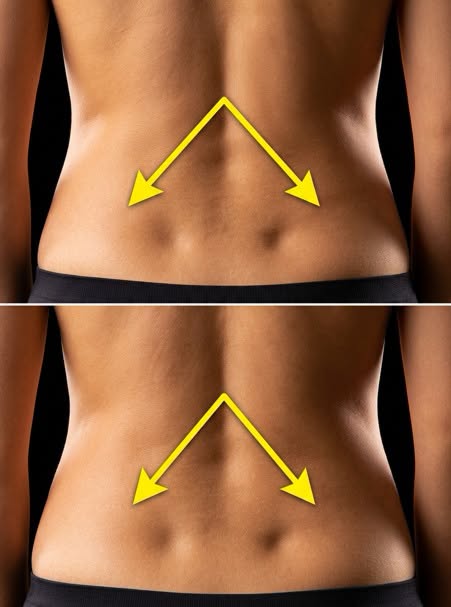
Lower back dimples: what your genetics reveal about these mysterious hollows
They catch the eye for reasons we don’t quite understand; those two little hollows just above the buttocks are certainly intriguing. Some find them irresistible, others wonder why they don’t have them. But their origin and meaning go far beyond mere aesthetics, and what they reveal about your body might surprise you.
Located at the base of the back, just above the buttocks, these two small natural depressions often go unnoticed… until they are spotted. Objects of fascination for some, of curiosity for others, they bear mythological names and conceal a history far richer than their mere appearance. Let’s discover together what these discreet hollows truly reveal about our anatomy.
The origin of these dimples: between heredity and anatomy
Known as Venus dimples in women and Apollo dimples in men, these indentations form precisely where the skin is directly attached to the iliac bone, a structure in the pelvis. Contrary to what one might think, they are not the result of well-developed muscles or intensive athletic training. Their presence is primarily a matter of genetics: you are either born with them or you will never have them, regardless of your lifestyle or body shape.
Imagine these dimples as small, natural “windows” on the pelvis. If your body shape matches certain inherited criteria, they appear spontaneously. A slim figure can certainly make them more visible, but be aware: they are in no way an indicator of thinness.
A mythological heritage with timeless charm
The choice of their names is far from arbitrary. In mythology, Venus, goddess of love and beauty, embodied the perfect balance of the body. These dimples were then perceived as a sign of physical perfection. Today, they continue to fascinate, drawing the eye and lending the lower back a particular elegance.
But their appeal isn’t limited to aesthetics. Some specialists suggest that these hollows could also indicate good muscle tone and satisfactory skin elasticity. In a way, they act as subtle markers of a healthy and well-balanced body.
A health indicator or a mere coincidence?
Should you be alarmed if you don’t have these dimples? Absolutely not: their absence has no impact on your health. However, their strategic location – in an area of the lower back where essential nerves and blood vessels pass – is a point of interest for healthcare professionals.
Physiotherapists, for example, sometimes use them as reference points to assess posture or pelvic alignment. Some observations even suggest that people with these dimples tend to have better natural posture, although this is by no means an absolute rule.